Oslo extends zero-emission rules to private construction sites
Oslo has voted to apply its zero-emission construction site requirements to private projects from July 2028, with Utrecht's permit rules for generators and small plant starting the same year.
Oslo City Council has extended its zero-emission construction site requirements from its own projects to private ones. From July 2028, private sites in the city will need to meet a minimum share of zero-emission energy, which matters to anyone whose site power still comes from a fuel-powered generator.
The decision was reported by Bellona EU on 22 October 2026.
What was decided
According to Bellona, the council adopted the local resolution on 23 September. Until now the zero-emission construction site (ZECS) requirements applied only to the City Council's own projects. Oslo is the first Norwegian municipality to take this step.
The rule is framed around energy rather than machine count. From July 2028, at least 30% of the energy used on each construction site must come from zero-emission solutions or biogas.
Norwegian housing developers' association NBBL described the proposal as adjusted after consultation in a 1 September update. In its account, the phasing starts at 30% in 2028 and reaches 75% in 2032, slower than the original plan of 30% from 2027 and 90% by 2030. The size threshold for building projects was raised from 200 to 500 square metres. For civil works, the rules apply when a project moves more than 500 cubic metres of material.
Oslo municipality said when it presented the regulation that implementation would be gradual, with exemptions for the smallest sites. It also said its own sites show that the market for electric construction machinery is growing quickly.
Utrecht follows in 2028
Bellona reports that Utrecht will also apply minimum zero-emission requirements for construction machinery from 2028 to anyone applying for a permit for construction or demolition work.
The city's own permit requirements table is specific about site power. For 2028 and 2029 it lists stationary equipment such as generators, pumps and tower cranes below 560 kW as 100% zero-emission, and equipment under 19 kW as 100% zero-emission as well. The table comes with explanatory notes that qualify these lines.
Bellona adds that Barcelona, Eindhoven, Amsterdam, Copenhagen, Stockholm and Gothenburg already include minimum public procurement requirements or electrification targets. Vienna, Zurich, Nuremberg and Hamburg have piloted zero-emission sites in municipal projects.
What changes on site
The main shift is who is covered. Until now, zero-emission rules in Oslo reached sites where the city was the client. Permit-driven rules reach private developers and the contractors working for them.
A quota based on energy points to the whole site, not only the largest machines. Power for tools, pumps, cabins and lighting sits in the same calculation as fuel for excavators, so small generators come into view alongside heavy plant.
In Utrecht, the generator is named directly. Stationary power equipment is one of the categories moving to zero-emission on the permit route, alongside light machinery.
The 2028 start dates leave a lead time of roughly two years. For plant hire companies, private-sector demand in these cities will begin to follow the public-sector demand that already exists. The Oslo record also shows how the market has moved: Bellona notes that a requirement set when few zero-emission machines were available now has 200 completed projects behind it.
Renset in context
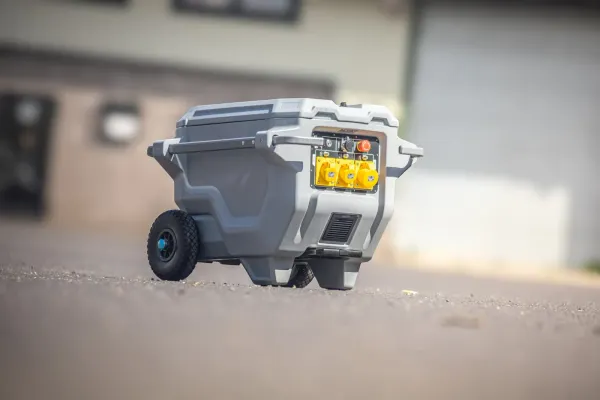
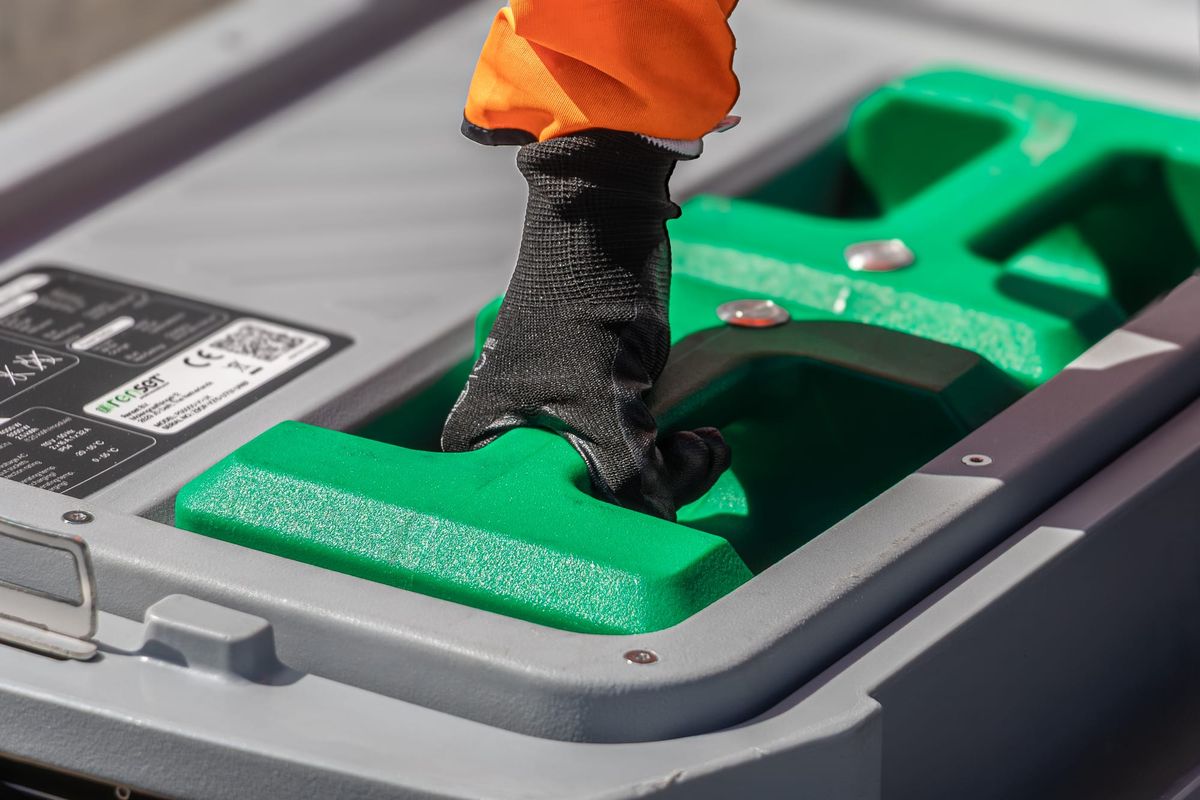
Renset's PS5000 is a modular, zero-emission portable battery power station that replaces diesel and petrol generators on construction, industrial and utility sites. Its battery modules are swappable, so batteries can be replaced without shutting down equipment. Renset publishes figures of below 45 dB in operation and zero toxic exhaust.
Sources
- Oslo extends zero-emission requirements to private construction sites (Bellona EU)
- Nå går Oslo for utslippsfrie byggeplasser (NBBL)
- Byrådet vil innføre gradvise krav om utslippsfrie byggeplasser (Oslo kommune)
- Minder uitstoot op de bouwplaats (Gemeente Utrecht)